A couple of weeks ago, my husband was doing some yardwork outside. He was working on pulling out some dead stems from one of the rose bushes in the front yard when he lost his balance and fell into the rose bush. His left arm caught the brunt of the fall. After picking himself up out of the rose bush (and, of course, doing a quick look around to make sure no one saw him), he began the tedious task of removing many thorns from his scratched up forearm. The next day, as he continued what he started in the rose bush, he fell again! Same process followed. Then, a few hours later he fell against the door frame of our door leading from the garage out to the back yard, scraping his arm in the same location where the thorns were removed earlier in the day, as well as the day prior.
A couple of days later, his arm began to swell. It became red and hot to the touch. It became obvious the next day, a Friday, that ignoring it probably was not a good idea. He went to our family doctor, received a shot of a strong antibiotic and an oral one to start taking that same afternoon. He was told if it worsened, to go to the ER over the weekend.
Good thing he had a shot. After all, Friday night is card night with my parents, my sister and her husband. We don’t miss card night unless we are sick with Covid or something equally as serious. Apparently, my husband did not put a swollen, infected arm in that category. 😉 It was a great game, though. The women won! (There is a story there…for another day.)
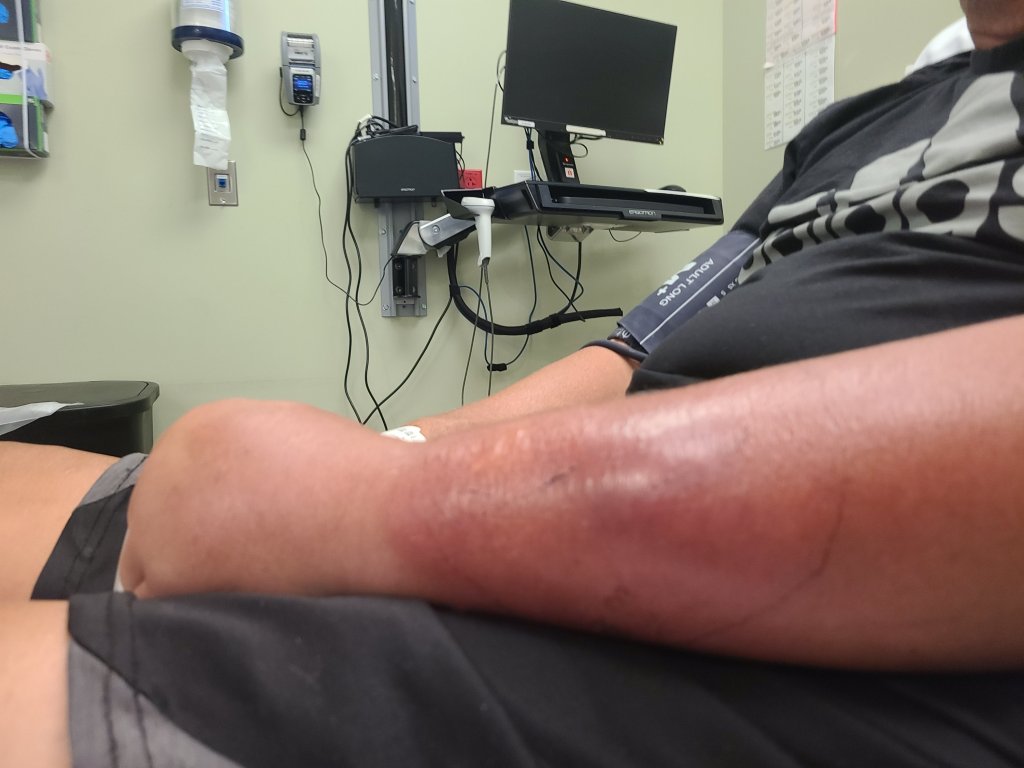
Saturday morning, I drove my husband to the ER, where an abscess was lanced, that formed overnight in his forearm. He was admitted to the hospital so they could watch how he responded to the antibiotics already given, as well as administer additional I.V. antibiotics. Long story, short. I brought him home from the hospital this afternoon, a Tuesday.
Before leaving the hospital, wound care met with him to clean and re-dress the wound in his arm. The nurse who worked on him explained how important it is for him to eat more protein during this healing process. He requested steak for dinner tonight. I obliged and added salad and hash browns to his request.
Below is very interesting information from a pamphlet he was given by his wound care nurse about WHY eating more protein and a few other nutrients is so important for wound healing.
How Do Good Nutrients Help To Heal Wounds?
Eating well during wound healing helps you heal faster and fight infection. During healing, your body needs more Protein, Fluids, Vitamin A, Vitamin C, Zinc and L -Arginine to name a few.
The best source of these nutrients is food and water, but if you are not able to eat a good balanced diet you will need to add a supplement. Ask your healthcare provider about taking supplements or multivitamins.
PROTEIN
Protein is used to build, maintain, and repair body tissues, as well as help to maintain a healthy immune system. You should eat protein-rich foods with each meal and snack. Eat the protein portion of your meal first in case you become too full.
Extra protein is needed for wound healing. Wounds can cause a loss of up to 50 grams of protein per day. If extra protein is not taken in from an outside source, the body will break down existing proteins stored in your muscles, making them weaker.
Protein requirements almost DOUBLE while there is an actively healing wound.
- A 100-pound person requires 36 grams of protein per day.
- A 100-pound person with a wound requires at least 68 grams of protein per day.
Protein can be found in: meats, milk, cheese, yogurt, eggs, poultry, fish, beans, peas, tofu, and powder.
FLUIDS
Fluids are needed for oxygen profusion, hydration to the wound bed, as the transport medium for nutrients, as a solvent for vitamins, minerals, glucose, amino acids, and to transport waste away from the cells. In addition to providing calories and protein to promote wound healing, fluid intake is equally important. Achieving hydration needs and preventing dehydration is vital.
It is important to drink at least 8 cups of water or non-caffeinated, non-alcoholic beverages every day.
VITAMIN A
Vitamin A stimulates collagen and increases your defense against infection.
Vitamin A can be found in: milk, cheese, eggs, fish, liver, dark green veggies, oranges, and red fruits.
VITAMIN C
Vitamin C plays an important role in collagen synthesis and formation of new blood vessels (angiogenesis), as well as strengthening tissue in the skin and muscles.
Vitamin C can be found in: oranges, grapefruit, citrus fruits and juices, tomatoes, leafy veggies, potatoes, broccoli, cabbage, and cauliflower.
ZINC
Zinc increases skin cell production and wound strength, it increases tissue growth & healing, and helps the immune system.
Zinc can be found in: red meat, fish, shellfish, milk products, poultry, and eggs, as well as fortified cereals.
L-ARGININE
L-Arginine is an amino acid. Amino acids are the building blocks of protein throughout the body. They enhance protein metabolism, helping to reduce muscle loss and help to strengthen the wound.
L-Arginine can be found in: nuts, seeds, dairy products, turkey, chicken, beef, oats, corn, and brown rice.
Adequate nutrients will help achieve optimal wound healing rates, so by eating well it gives your wounds the best chance to heal.
REMEMBER:
Eat a wide variety of foods every day to get the protein, vitamins, and minerals you need to heal your wound and stay and keep it healthy or add supplements.
*If you have diabetes, kidney disease, blood thinners, or need to limit your fluid intake, talk to your healthcare provider before follow these tips.


Leave a comment